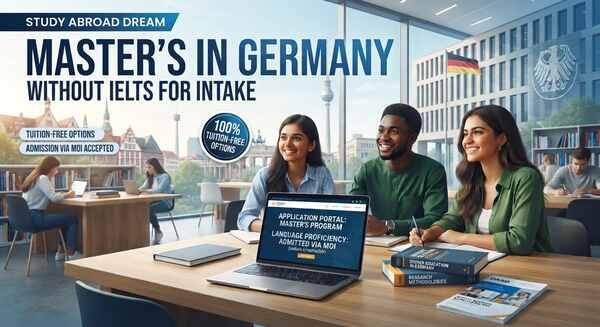
Which universities in Germany offer master’s programs without IELTS for the 2027 intake?. Study in Germany Without IELTS 2027: Complete Guide to English-Taught Programs and Universities. Introduction to Studying in Germany Without IELTS. Embarking on a journey of study in Germany is a dream for many ambitious international students seeking world-class higher education. Traditionally, gaining admission to top-tier universities required proof of English proficiency through standardized tests. However, a growing number of institutions now offer an IHLETS waiver for candidates who meet specific alternative criteria. This shift opens up incredible educational opportunities across various degree programs, ranging from a bachelor’s degree to an advanced master’s degree or PhD. Navigating this landscape allows global scholars to avoid expensive tuition fees at public universities while experiencing European academic excellence. Understanding these pathways helps prospective students plan their academic futures effectively without the hurdle of traditional language exams.
For many candidates, the thought of preparing for standardized tests creates unnecessary stress. Fortunately, higher learning institutions in the region recognize that language competence can be demonstrated through other reliable means. Whether you are targeting a specialized graduate program or a broad undergraduate curriculum, Germany remains a premier study destination. By focusing on institutional flexibility, applicants can target programs that value overall academic merit over rigid test scores. This approach democratizes access to prestigious classrooms, making global learning more inclusive for diverse student populations worldwide.
Top German Universities Offering Admissions Without IELTS
Finding the right institution is the first practical step toward securing a tuition-free education abroad. Numerous universities in Germany welcome global applicants without demanding traditional language test scores, provided the previous medium of instruction was English. Prominent public institutions and major technical universities across various federal states feature extensive English-taught curricula. Famous names like the Technical University of Berlin, the Free University of Berlin, Heidelberg University, and the University of Bonn provide robust academic environments. These campuses foster innovation, research, and cross-cultural collaboration, ensuring that every student receives a comprehensive global perspective during their academic tenure.
Additionally, institutions such as the Technical University of Munich, Freiburg University, and the University of Hamburg offer numerous programs where standard language certificates are waived under specific conditions. Students can pursue diverse disciplines without worrying about exorbitant tuition fees, since most public institutions charge only nominal semester contributions. Exploring these institutional options requires careful review of individual university guidelines, as policies can vary significantly between departments and faculties. Choosing the right academic hub sets a strong foundation for future career milestones and professional growth.
Alternative Proofs of English Proficiency: Medium of Instruction (MOI)
When standard testing is bypassed, universities rely on alternative documentation to verify a candidate’s linguistic readiness. The most common alternative is the medium of instruction certificate, commonly known as an MOI certificate. This official document proves that your previous secondary school or university degree was entirely taught and examined in English. Admissions committees accept this paperwork alongside a formal waiver letter issued by your former educational institution. Ensuring that your transcripts explicitly state the language of delivery is crucial for securing a favorable evaluation from the admissions office.
Beyond the standard instruction letter, some universities evaluate your overall educational history and academic background during an interview or screening process. Providing comprehensive records, clear course descriptions, and authentic institutional seals guarantees that your application meets all administrative expectations. This flexible evaluation method acknowledges that students who have already spent years studying in English do not need to prove their fluency through expensive external examinations. Preparing these documents ahead of time streamlines the verification process and minimizes unnecessary delays.
Admission Requirements and Application Process for German Universities
Navigating the formal admission requirements requires meticulous organization and attention to detail. Every prospective student must assemble a complete set of application materials, including certified academic transcripts, comprehensive letters of recommendation, a persuasive statement of purpose, and a detailed CV. Depending on the target institution, applications are submitted either through the centralized Uni Assist portal or directly via the university’s online application portal. Meeting official deadlines for the winter semester or summer semester is vital to ensure your candidacy is reviewed fairly by the selection committee.
The administrative journey involves several steps, from verifying document authenticity to paying minor application fee charges where applicable. Ensuring that all supporting papers are properly translated and notarized prevents administrative rejections. Many students find that keeping a digital checklist helps manage multiple university applications simultaneously. Staying proactive and monitoring institutional portals for updates ensures a smooth transition from applicant to officially enrolled student.
Visa Requirements and Financial Proofs for International Students
Securing entry into the country involves fulfilling strict visa requirements mandated by consular offices. International students must demonstrate financial self-sufficiency, typically by depositing funds into a designated blocked account that covers estimated living expenses. Along with proof of funds, applicants must secure valid health insurance and present a formal letter of acceptance from their chosen German university. Preparing for the embassy appointment requires gathering all financial documents, passport copies, and completed visa application forms well in advance of your intended travel date.
Managing finances effectively is a cornerstone of a successful study abroad experience. While public universities do not charge high tuition, students must budget carefully for monthly accommodation, food, and local transportation costs. Exploring part-time campus jobs or permissible working hours during your studies helps offset daily expenses. Thorough preparation regarding financial compliance ensures a stress-free transition and allows you to focus entirely on your academic and professional development.
Frequently Asked Questions (Latest Google People Also Ask)
Can I study for a master’s degree in Germany without submitting an IELTS score?
Yes, numerous German universities allow international students to enroll in English-taught master’s programs without an IELTS score. Instead of standardized tests, these institutions accept a Medium of Instruction (MOI) certificate confirming that your undergraduate degree was taught entirely in English, or they may conduct an internal language assessment during the admission evaluation.
Do public universities in Germany charge tuition fees for international students?
Most public universities in Germany offer tuition-free education for both domestic and international students, regardless of their nationality. Students are only required to pay a nominal semester contribution fee each term, which usually includes public transportation tickets and administrative services, keeping the overall cost of higher education remarkably affordable.
What is a blocked account, and why is it mandatory for a German student visa?
A blocked account is a specialized type of bank account required by German authorities to prove that international students have sufficient financial resources to cover their living expenses for at least one year. Students deposit a mandated annual amount into this account and withdraw a fixed monthly allowance to support themselves while studying.
Is the APS certificate required when applying to German universities?
The Academic Evaluation Centre (APS) certificate is mandatory for applicants from certain countries, such as India and China, to verify the authenticity of their academic documents before applying to German universities. It serves as a prerequisite for both university admission applications and subsequent student visa processing at the German embassy.
Which Universities in Germany Offer Master Programs Without IELTS for 2027 Intake?
Pursuing higher education in Europe has become a primary objective for ambitious scholars seeking world-class academic excellence without facing crippling financial burdens. When planning for the 2027 intake, many international students mistakenly believe that booking an IELTS or TOEFL exam is an absolute prerequisite for securing a university admission. In reality, public higher education institutions across central Europe offer alternative pathways for language verification, allowing candidates to complete a master’s degree smoothly. Navigating the application process requires a clear understanding of institutional policies, alternative language certifications, and documentation protocols. By leveraging alternative proofs like a Medium of Instruction (MOI) certificate, thousands of scholars successfully enroll in rigorous graduate programs every year. This pathway opens doors to exceptional career opportunities and cross-cultural growth while eliminating unnecessary testing hurdles.
Understanding the Alternative Language Framework for Graduate Admissions
The foundational requirement for any English-taught master’s degree is proving that the applicant can comprehend complex academic material. Traditionally, standardized tests like IELTS serve as the universal benchmark for international student admissions. However, many prominent German institutions evaluate English proficiency through alternative frameworks to accommodate diverse academic backgrounds. If your previous bachelor’s degree was conducted entirely in English, numerous academic councils waive standard language tests completely. This flexibility reduces the overall cost of living preparation stress and streamlines the path toward securing an official admission letter. Securing a spot in a top-tier graduate program depends heavily on submitting clear institutional proof rather than standard test score cards.
The Role of Medium of Instruction Certificates in University Applications
An official medium of instruction document serves as a powerful instrument during the university application phase. Issued directly by the registrar of your previous college, this certificate explicitly states that your undergraduate syllabus was taught and examined exclusively in English. Prominent public institutions like the Technical University of Munich and RWTH Aachen University frequently accept this document under specific departmental guidelines. Candidates aiming for technical master’s degree options find this alternative particularly advantageous. It bypasses expensive testing fees and integrates seamlessly into digital application portals. Always verify individual faculty rules on the official university website because departmental acceptance criteria can vary widely.
Top Public Universities in Germany Offering Admissions Without IELTS
Several prestigious institutions across the region maintain flexible language policies for incoming graduate scholars. The Free University of Berlin, University of Siegen, and University of Kassel evaluate candidates based on alternative proficiency indicators or prior English-medium transcripts. These top universities offer comprehensive engineering, technology, and social science curricula without imposing rigid standardized testing demands. Securing an acceptance letter from these institutions paves the way for a smooth student visa interview at local embassies. Because tuition fees remain virtually zero at public institutions, these programs attract high-achieving applicants worldwide. Careful planning of your admission deadline ensures all digital credentials upload correctly before portal locks.
Financial Planning, Scholarships, and Living Expenses for International Students
While public higher education institutions charge minimal tuition, students must still account for everyday living costs and administrative semester contributions. Managing financial requirements often involves opening a blocked account or securing a reliable scholarship. Organizations like the DAAD provide prestigious funding packages covering monthly stipends, health insurance allowances, and travel grants. Students can also explore merit-based scholarship options or campus financial aid programs to offset personal expenses. Smart financial planning guarantees a stress-free transition, allowing scholars to focus entirely on their research opportunities and academic milestones. Exploring external education loans or part-time campus jobs further stabilizes financial health during your stay abroad.
Navigating the German Student Visa and Immigration Process
Obtaining a student visa requires presenting your official admission letter alongside proof of adequate financial resources. Visa officers evaluate your dossier based on institutional acceptance rather than the specific method used to prove language competency. If a university admits you via an MOI letter, that same documentation satisfies local consular verification standards. Indian applicants must also secure an APS certificate verifying their academic credentials before booking consular appointments. Maintaining compliance with local immigration policy ensures seamless extensions once you arrive on campus. Part-time work regulations also permit international scholars to gain valuable professional experience during their studies.
Frequently Asked Questions (Latest Google People Also Ask)
Can I get full admission to a German university without taking IELTS?
Yes, numerous public institutions accept alternative proofs such as a medium of instruction certificate or alternative exams like TOEFL iBT. Always cross-check specific program guidelines on official portals.
Will a lack of an IELTS score cause visa rejection at the embassy?
No, consular authorities issue student visas based on official university admission letters and financial proofs rather than specific language test brands.
What alternative English tests do German graduate programs accept?
Most English-taught departments widely accept TOEFL iBT, PTE Academic, and the Duolingo English Test alongside official university MOI letters.
Are tuition fees required at public universities in Germany for international students?
Public institutions across most federal states charge zero tuition fees, requiring only nominal semester contributions ranging from three hundred to seven hundred euros annually.
How do I prove financial stability for my German student visa application?
Students typically demonstrate financial backing by depositing funds into a designated blocked account or presenting approved scholarship award letters.
Official Scholarship & University Resources
-
DAAD Scholarship Database: https://www2.daad.de/deutschland/stipendium/datenbank/en/21148-scholarship-database/: Various (Currently Open for 2026/2027 Cycles)
-
Technical University of Munich Admissions: https://www.tum.de/en/studies/application – Deadline: July 15 (Winter Semester) / January 15 (Summer Semester) (Currently Open)
-
Free University of Berlin International Portal: https://www.fu-berlin.de/en/studium/international-student/index.html: July 15, 2027 (Currently Open)
-
University of Bonn Application Portal: https://www.uni-bonn.de/en/studying/international-students: July 15, 2027 (Currently Open)
-
Uni-Assist Portal for German Universities: https://www.uni-assist.de/en/ – Deadline: Varies by Institution (Currently Open)
-
DAAD (German Academic Exchange Service) Scholarship Portal: https://www.daad.de/en/studying-in-germany/scholarships/ – Application Deadlines Vary by Program (Currently Open for 2027 Cycles)
-
Technical University of Munich (TUM) Admissions Portal: https://www.tum.de/en/studies/application Semester 2027 / Winter Semester 2027 Deadlines Active
-
RWTH Aachen University Application Page: https://www.rwth-aachen.de/cms/root/studium/~ioz/degreestudients/ – Next Intake Deadlines Open
-
Free University of Berlin Official Admissions: https://www.fu-berlin.de/en/studium/studienorganisation/bewerbung/ Application Window Open
Stay Connected!
Never miss a scholarship deadline! Join our channels for daily fully-funded opportunities & instant alerts.