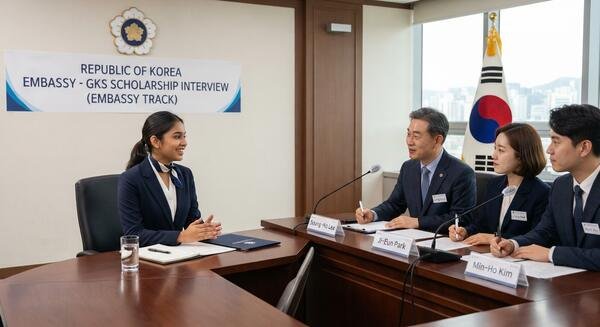
How to prepare for the GKS Scholarship embassy track interview successfully? Securing a prestigious Global Korea Scholarship (GKS) through the embassy track is a life-changing milestone for aspiring international students aiming for higher education in South Korea. When candidates clear the initial document screening phase, they enter the critical interview stage, which evaluates their academic potential, personal maturity, and cross-cultural suitability. Proper preparation for this evaluative encounter requires a deep understanding of the application process, eligibility criteria, and specific embassy track protocols. Applicants must master the art of articulating their study plan, career goals, and genuine motivation for choosing top universities in Korea.
Understanding the GKS Scholarship Embassy Track Interview Process
The embassy interview serves as a vital filtering mechanism conducted by diplomatic missions and consular officials to identify the most promising candidates from the applicant pool. During this phase, a panel of evaluators assesses your verbal articulation, academic excellence, emotional intelligence, and overall alignment with the core objectives of the government scholarship. Knowing what to expect inside the interview room helps reduce anxiety and fosters calm confidence. Candidates should familiarize themselves with standard formal protocols, arriving early with a neatly organized folder containing all verified identification and supporting documents. Maintaining professional etiquette, offering a respectful bow, and projecting a poised demeanor create an immediate positive impression on the selection committee.
Common Questions Asked During the GKS Embassy Interview
Preparing for the wide array of potential questions is essential for delivering concise, impactful responses during the interview. Evaluators frequently begin by asking candidates to deliver a compelling self-introduction that highlights their academic history, leadership experiences, and unique background. Common inquiries also explore your specific reasons for wanting to study abroad in Korea, why you selected your chosen major, and how your master’s degree or bachelor’s degree aligns with your long-term career plans. Panelists will heavily scrutinize your commitment to returning to your home country after graduation to contribute to bilateral relations and national development. Anticipating these inquiries allows applicants to structure their thoughts effectively without sounding robotic or overly rehearsed.
Demonstrating Academic Excellence and Study Plan Clarity
A standout performance requires clear evidence of your intellectual rigor, academic achievements, and the viability of your proposed study plan. Evaluators look closely at your GPA, research background, thesis topics, and publications to gauge your capability to handle rigorous graduate programs or undergraduate coursework. Your Statement of Purpose (SOP) must align seamlessly with what you speak during the session, proving that you have thoroughly researched your prospective university and potential academic advisors. Highlighting specific courses, research labs, and academic resources demonstrates a genuine passion for your field of study. Articulating clear, measurable milestones for your research project reassures the panel that you possess the focus and dedication required to succeed as a scholarship recipient.
Mastering Korean Language Proficiency and Cultural Adaptation
While many tracks do not strictly require advanced Korean fluency at the application stage, demonstrating basic Korean language proficiency or a strong willingness to learn significantly boosts your candidacy. The mandatory one-year Korean language training year requires resilience, patience, and adaptability from every international student. Discussing your current TOPIK preparation efforts or your familiarity with Korean culture, history, and social norms signals deep respect and readiness for cultural immersion. Addressing potential challenges such as culture shock, homesickness, and adjustment strategies proves your emotional maturity. Showing an open-minded appreciation for Korean traditions, cuisine, and societal values reassures evaluators that you will thrive during your extended stay abroad.
Non-Verbal Communication and Professional Presentation Etiquette
Non-verbal cues often speak louder than spoken words, making professional presentation etiquette a decisive factor in your overall score. Maintaining upright posture, steady eye contact, and a warm, approachable facial expression conveys confidence and trustworthiness. Your voice modulation, tone, and pacing should remain calm, audible, and engaging throughout the conversation. Wearing clean, well-fitted formal attire demonstrates respect for the diplomatic institution and the gravity of the occasion. Simple habits like active listening, nodding respectfully when panelists speak, and avoiding nervous fidgeting project executive maturity and polish. A polite closing statement accompanied by a gracious bow leaves a lasting, positive memory with the interview panel.
Navigating Tough Scenario-Based and Behavioral Questions
Interviewers often throw curveball questions, such as situational or behavioral scenarios, to test your quick thinking and crisis management skills. These prompts might explore how you handle intense pressure, team conflict, academic setbacks, or unexpected failures. Utilizing structured frameworks like the STAR method helps you formulate logical, coherent answers that highlight your problem-solving abilities and emotional resilience. Admitting past mistakes gracefully while emphasizing the lessons learned demonstrates profound self-awareness and personal growth. Remaining composed when confronted with unexpected or challenging inquiries proves that you can navigate the complexities of living and studying in a foreign country without losing your equilibrium.
Overcoming Common Mistakes That Lead to Interview Rejections
Many qualified applicants face rejection simply due to avoidable pitfalls during their interaction with the panel. Memorizing rigid scripts often leads to a robotic delivery that lacks authenticity and fails to engage the evaluators. Arrogance, defensiveness, or dodging direct questions will instantly diminish your credibility and harm your chances of selection. Failing to research your chosen university or showing vague, unfocused career ambitions signals a lack of genuine preparation. Candidates must avoid negative language, blaming others for past failures, or exaggerating their credentials. Practicing mock interviews, recording your responses, and incorporating constructive feedback ensures you eliminate these common errors before facing the actual committee.
Post-Interview Strategy and Waiting for Results
Once the interview concludes, shifting your mindset toward patience and proactive planning is crucial for maintaining mental well-being. Reflecting on the session by noting tricky questions and identifying areas for improvement offers valuable lessons for future academic pursuits. While waiting for the official results release, resume your daily routine, focus on your current academic or professional duties, and monitor official communication channels diligently. If successful, prepare immediately for subsequent stages, such as university track applications, visa documentation, and pre-departure arrangements. Approaching every outcome with grace and perseverance ensures that your overarching journey toward achieving your global education dreams remains unstoppable.
Frequently Asked Questions (Latest Google People Also Ask)
What are the most common questions asked in the GKS embassy interview?
The most frequent inquiries center around your self-introduction, reasons for choosing Korea, your specific study plan, your academic background, and your plans to contribute to your home country after graduation. Candidates should frame their answers around their genuine motivations, aligning their personal goals with the broader objectives of the government scholarship.
How should I dress for the GKS embassy interview?
Applicants should wear clean, formal business attire that reflects professionalism and respect for the diplomatic setting. A well-fitted suit or formal business-casual clothing ensures a polished, authoritative first impression that aligns with high standards of higher education evaluation.
Is speaking Korean mandatory during the GKS embassy interview?
Speaking fluent Korean is generally not mandatory for tracks that include a preliminary language training year, but demonstrating basic TOPIK knowledge or a strong willingness to learn is highly advantageous. Evaluators look for enthusiasm and cultural curiosity rather than native-level fluency.
What happens if I fail the embassy track interview?
Failing the embassy round means elimination from that specific application cycle, but candidates can reapply in subsequent years or explore alternative scholarship opportunities, self-funded admission pathways, or university-track applications to fulfill their dream of studying in Korea.
How long does the GKS embassy interview usually last?
The session typically ranges from ten to twenty minutes per candidate, depending on the specific embassy and the size of the applicant pool. During this brief window, candidates must deliver concise, impactful answers that highlight their academic readiness and personal suitability.
Conclusion
Mastering the GKS embassy interview requires meticulous preparation, authentic communication, and a clear vision of your academic future. By addressing every evaluative criterion with confidence and poise, you dramatically increase your chances of securing a life-changing, fully funded scholarship in South Korea.
Official Scholarship & University Resources
-
Global Korea Scholarship Official Portal—Study in Korea—Application Deadline: Annually in February to March (Currently Open for upcoming cycle planning)
-
National Institute for International Education (NIIED)—Application Deadline: Annually varying by embassy track schedule (Currently Open)
-
Seoul National University Admissions Portal—Application Deadline: Annually in March and September (Currently Open for Upcoming Terms)
-
Korea University Official Admissions—Application Deadline: Annually for spring and fall intakes (currently open)
-
Yonsei University International Admissions—Application Deadline: Annually matching GKS university track timelines (Currently Open)
Stay Connected!
Never miss a scholarship deadline! Join our channels for daily fully-funded opportunities & instant alerts.