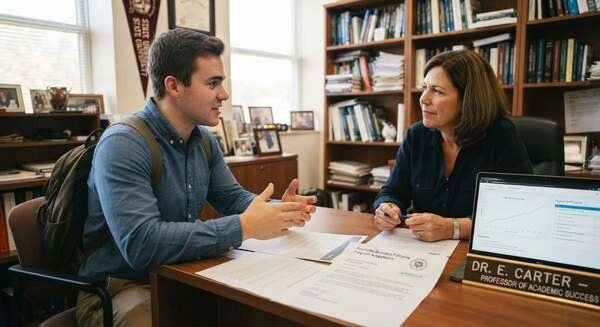
How to Convince University Professors for an Acceptance Letter with a 2.7 GPA? Securing a supervisor’s endorsement when your academic record falls below standard cutoffs can feel like an uphill battle. Many determined candidates frequently wonder how to convince university professors to accept a letter with a 2.7 GPA without getting instantly filtered out by automated software. While many institutions enforce strict baseline cutoffs, experienced faculty members possess the discretionary power to advocate directly for candidates who show exceptional research potential. Overcoming a modest grade point average requires shifting the evaluation focus away from past numerical scores and toward current competence, project execution, and professional drive. By implementing a targeted, highly personalized outreach strategy, you can demonstrate that your academic trajectory has evolved beyond early undergraduate struggles.
Understanding the Reality of a 2.7 GPA in Graduate Admissions
Gaining a realistic grasp of understanding the reality of a 2.7 GPA in graduate admissions helps you calibrate your expectations and target the right institutions. Many competitive programs establish a hard cutoff at a 3.0 on a 4.0 scale, meaning automated application portals might automatically reject files falling beneath that line. However, numerous comprehensive universities and international scholarship programs look beyond isolated numbers through a holistic review process. Faculty members often care far more about your independent thinking, problem-solving capabilities, and enthusiasm for specific scientific inquiries than past examination scores. Recognizing this distinction allows you to bypass rigid administrative gatekeepers by establishing direct, meaningful dialogue with potential mentors.
Crafting a Compelling Cold Email to Academic Supervisors
Mastering the art of crafting a compelling cold email to academic supervisors is the single most important skill for applicants facing grade deficiencies. Your initial message must never read like a generic broadcast; instead, it should reference specific recent publications or ongoing projects authored by the professor. Keep your outreach concise, professional, and laser-focused on how your unique technical skills can contribute directly to their laboratory or research group. A strong subject line that clearly indicates mutual research interests ensures your email gets opened rather than ignored. Demonstrating that you have actually read their work proves your genuine dedication and sets you apart from thousands of casual applicants.
Leveraging Research Experience and Publications to Offset Grades
Successfully leveraging research experience and publications to offset grades provides concrete proof of your current academic maturity. If you spent your undergraduate years working in labs, contributing to peer-reviewed journals, or building practical industry solutions, highlight these achievements prominently. Professors are always looking for reliable independent researchers who require minimal supervision and can hit the ground running on grant-funded projects. When you present tangible outputs—such as conference posters, GitHub repositories, or co-authored papers—past GPA shortcomings suddenly matter much less. This evidence signals to potential mentors that your practical output far outweighs historical transcript data.
Explaining Low Undergraduate Performance in Your Statement of Purpose
Skillfully explaining low undergraduate performance in your statement of purpose allows you to control your personal narrative with complete honesty and maturity. Instead of offering defensive excuses, frame past low grades as valuable learning experiences that taught you resilience and time management. Emphasize any upward grade trend during your final semesters, which demonstrates that you mastered difficult concepts over time. Admissions committees appreciate self-aware candidates who acknowledge previous shortcomings and outline concrete steps they took to overcome them. Transparency builds immediate trust and reassures evaluating professors that you possess the grit required to complete a rigorous graduate program.
Securing Strong Supporting Documents and Alternative Test Scores
Gathering and securing strong supporting documents and alternative test scores creates a multi-layered defense for your academic profile. Ask former professors or employers who know your work ethic intimately to write detailed recommendation letters that vouch for your dedication. If the program permits, submit high scores from standardized exams like the GRE, GMAT, or English proficiency tests like IELTS and TOEFL to demonstrate strong cognitive ability. Professional certifications or specialized online coursework certificates further validate your current technical competency in your chosen field. Providing this robust supplementary evidence reassures supervisors that you are fully prepared for advanced graduate-level academics.
Frequently Asked Questions (Latest Google People Also Ask)
Will professors reply to my email if I have a 2.7 GPA?
Yes, professors often reply if your email demonstrates a deep, genuine understanding of their recent research publications rather than just asking generically for funding.
Can an acceptance letter override a low university GPA requirement?
In many international scholarship programs and specific departmental tracks, a supportive professor’s endorsement letter carries significant weight and can help secure administrative waivers.
How can I show an upward trend if my overall GPA is low?
You can emphasize your performance in junior and senior-level major courses or highlight high grades in advanced specialized projects completed near graduation.
Conclusion
Overcoming a low GPA requires proactive professor outreach, demonstrable research competence, and honest self-reflection in your application essays. By focusing on your strengths and practical project output, you can successfully secure valuable faculty endorsements.
Official Scholarship & University Resources
-
Chinese Scholarship Council Official Portal: https://www.chinesescholarshipcouncil.com/ – Deadline: April 2027 (For 2027 Academic Intake, Currently Open)
-
CSC Guide Official Admission Directory: https://cscguideofficials.com/how-to-make-cv-for-acceptance-letter-updated/ – Resource Portal for Acceptance Letters (Active)